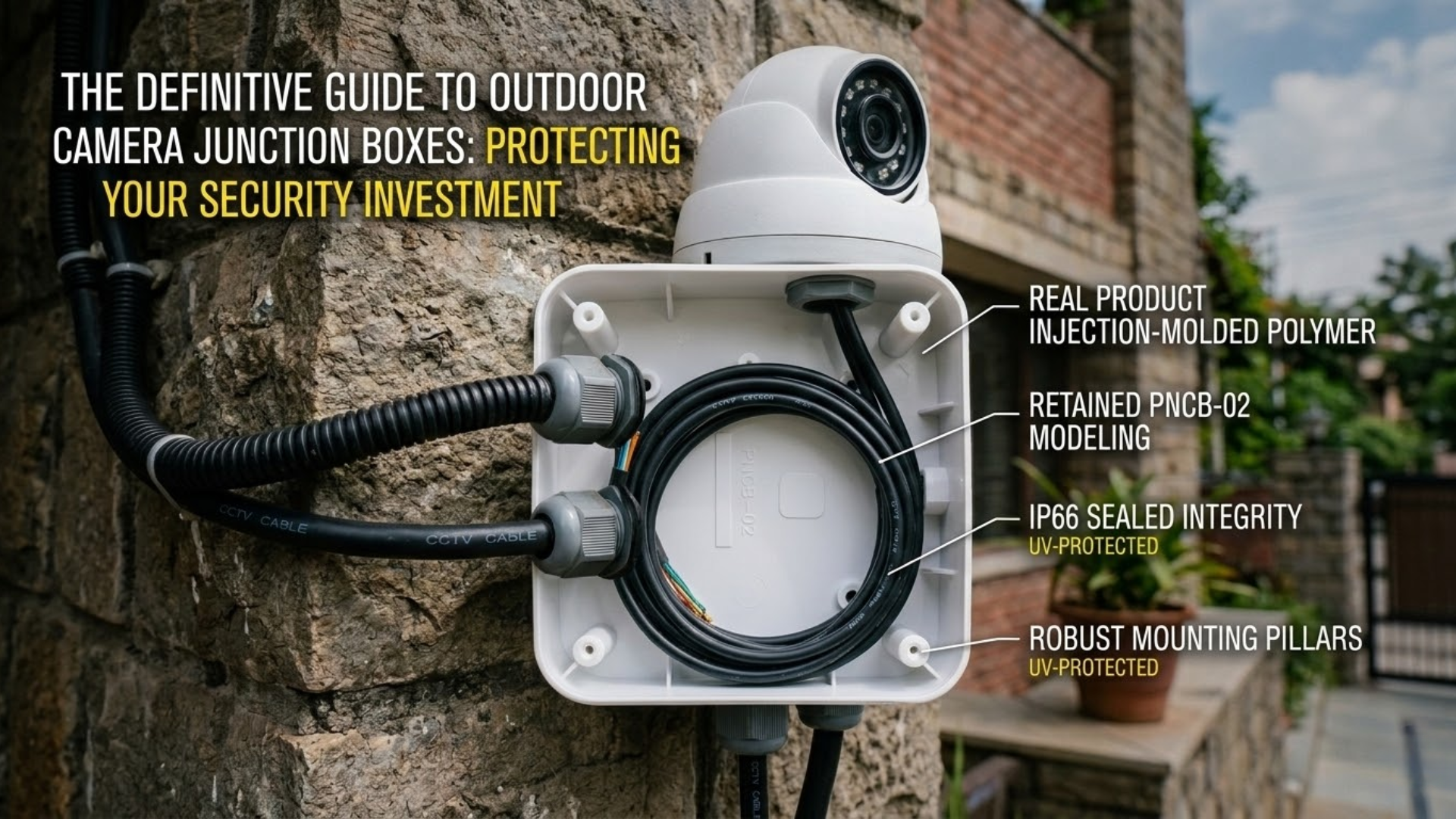
In the rapidly evolving landscape of Indian surveillance, simply buying a high-definition 4K camera is not enough. The weak point of any security system isn’t the lens—it’s the exposed wiring. Whether you are securing a marble factory in Kishangarh, a retail outlet in Jaipur, or a residential villa, the outdoor camera junction box is the most critical “unsung hero” of your setup.
1. Understanding the Anatomy of an Outdoor Camera Junction Box for CCTV
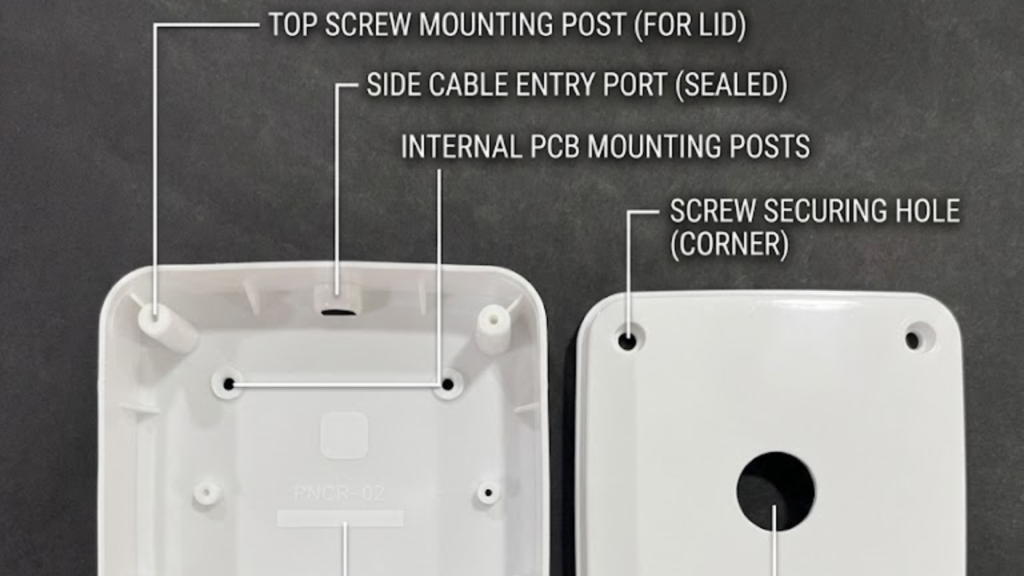
A junction box is not just a plastic container; it is a precision-engineered enclosure designed to manage electrical connections in hostile environments.
Key Components of a Professional Enclosure:
- Gaskets: High-quality rubber seals that prevent moisture ingress.
- Mounting Pillars: Internal structures to screw in the camera base without drilling through the back.
- Cable Glands: Compression fittings that grip the wire to keep the box airtight.
- UV Stabilizers: Chemical additives in the plastic that prevent it from cracking under the Indian sun.
Comparison: Plastic vs. Aluminum Junction Boxes
| Feature | ABS Thermoplastic Box | Die-Cast Aluminum Box |
| Durability | High (Impact Resistant) | Extreme (Vandal Proof) |
| Rust Resistance | 100% Rust-proof | Possible over 10+ years |
| Heat Dissipation | Moderate | Excellent (Best for high-power cameras) |
| Cost | Budget-friendly | Premium |
| Weight | Lightweight (Easy for false ceilings) | Heavy (Needs solid masonry) |
2. Why Weatherproofing is Essential for an Outdoor Camera Junction Box
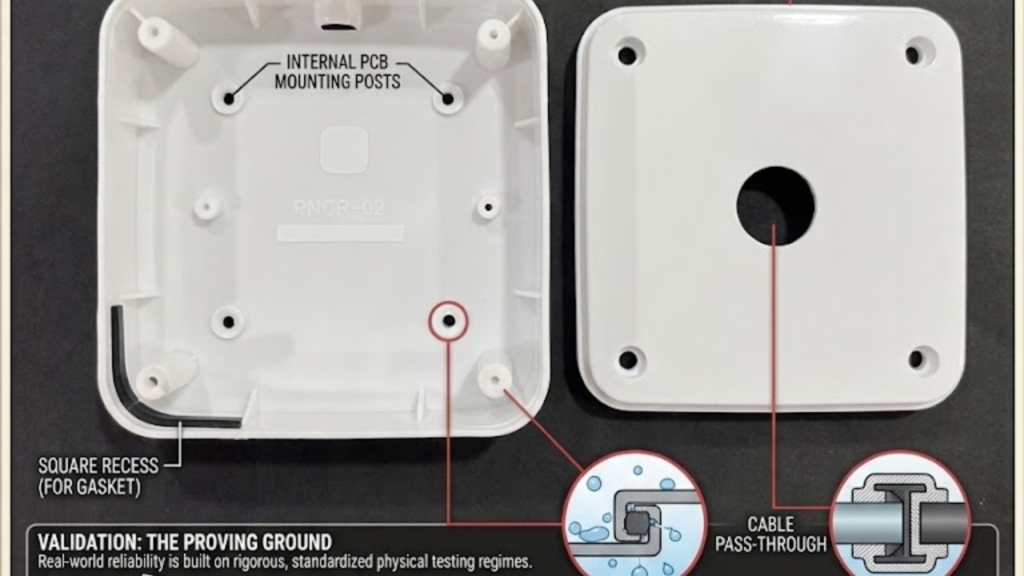
In India, “Outdoor” means surviving the monsoon floods and 50°C heatwaves. To ensure your camera lasts, you must understand IP (Ingress Protection) Ratings.
Common IP Ratings Explained:
- IP65: Dust-tight and protected against water splashes. Good for balconies.
- IP66: Protected against powerful water jets. The Standard for Indian Monsoons.
- IP67: Can be submerged in water temporarily. Essential for low-lying areas prone to waterlogging.
Expert Insight: Never use an indoor-rated PVC box for an outdoor camera. Within one summer, the plastic will become brittle and shatter, exposing your 10,000 INR camera to 100 INR worth of damage.
3. Top 5 Reasons for Installation (Detailed Breakdown)
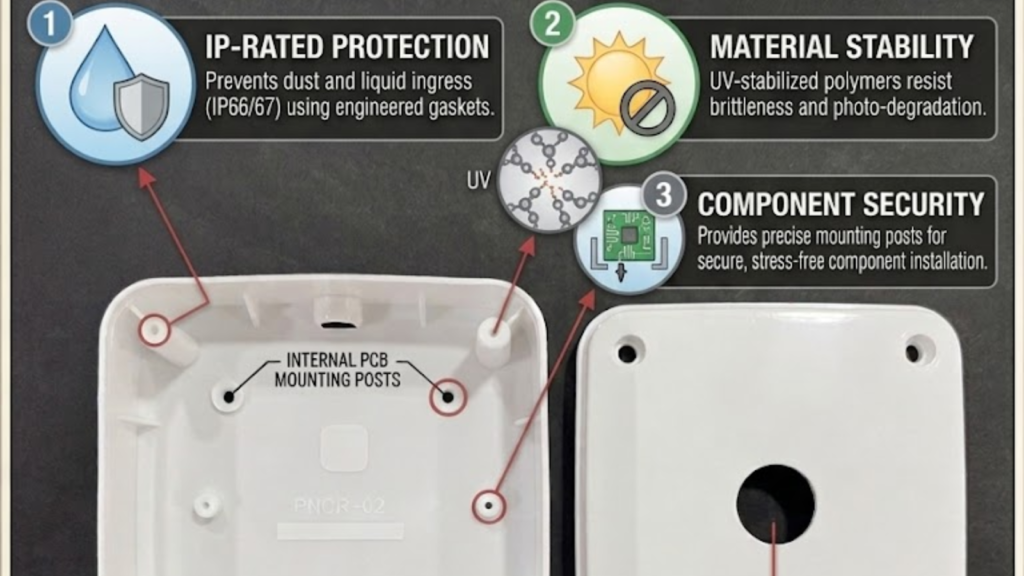
I. Eliminating the “Green Fungus” (Corrosion)
In humid regions like West Bengal or Kerala, copper wires oxidize rapidly. This creates a green residue known as corrosion. A junction box creates a sealed micro-environment, ensuring the BNC and DC connectors remain as shiny as the day they were installed.
II. Vandalism Deterrence
Professional thieves look for the “tail” of the camera. If they can see the connector, they can pull it apart. A junction box hides the “tail,” forcing the intruder to spend more time trying to break the box—time during which their face is already recorded.
III. Electrical Safety & Grounding
Surges are common in Indian power grids. A proper junction box allows for better cable management, reducing the risk of wires touching metal surfaces and causing a short circuit that could fry your DVR/NVR.
4. The Masterclass: How to Install an Outdoor Camera Junction Box Like a Pro
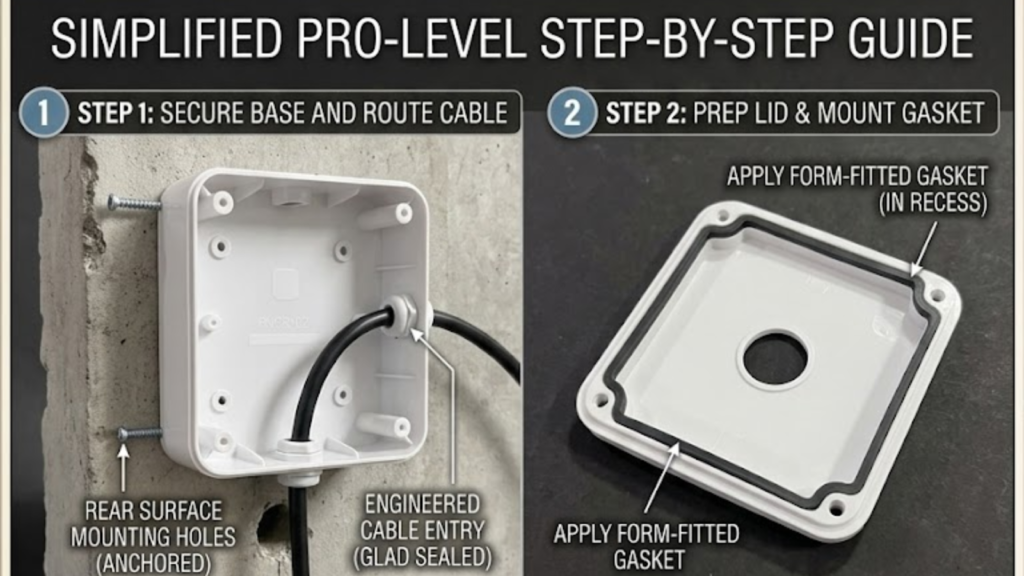
Installation in the Indian context isn’t just about screws and drills; it’s about battling monsoon seepage, extreme dust (especially in Rajasthan/NCR), and high-velocity winds. A professional installation ensures that your outdoor camera junction box remains a fortress for your wiring.
Phase 1: Pre-Installation Preparation (The Strategy)
Before you climb the ladder, you must evaluate the surface and the environment.
- Surface Analysis: If the wall is “Chuna” (Lime) or old brick, standard plastic wall plugs (Gitti) might slip. Use long-expansion nylon anchors for a rock-solid grip.
- Positioning: Always mount the box at least 8 to 10 feet high. This prevents casual vandals from reaching it and ensures the camera has a “top-down” bird’s-eye view.
- Tool Checklist: Ensure you have a SDS Rotary Drill, a Spirit Level (to ensure the box isn’t crooked), and a Heat Gun (if using heat-shrink sleeves for the connectors).
Phase 2: Step-by-Step Execution (The 5-Step Process)
Step 1: The “Drip Loop” Engineering
This is the most common mistake in Indian CCTV installations.
- The Problem: Rainwater follows the cable. If the cable goes straight into the box, water enters the box.
- The Solution: Create a U-shaped curve (Drip Loop) in the cable just before it enters the box. Gravity will force the water to drip off at the bottom of the “U” rather than flowing into your outdoor camera junction box.
Step 2: Precision Drilling & Sealing
- Template Use: Most premium junction boxes come with a paper template. Stick it to the wall to mark your holes perfectly.
- Waterproofing the Holes: Once you drill the holes, squeeze a small amount of Weatherproof Silicone Sealant into the hole before inserting the wall plug. This prevents “Wall Dampness” (Sillan) from entering your box from behind.
Step 3: Managing the “Cable Glands”
A high-quality outdoor camera junction box features dedicated entry points.
- Do not just cut a big hole. Use the provided rubber grommets or “Cable Glands.”
- Tightening: Once the wire is inside, tighten the gland until the rubber seal firmly grips the wire. This makes the box airtight, preventing ants and small spiders from making nests inside (a major cause of short circuits in India).
Step 4: Internal Wiring & Connector Hygiene
- The BNC/DC Connection: Wrap the BNC (video) and DC (power) connectors in Self-Amalgamating Tape (not just cheap electrical tape).
- Tuck & Secure: Do not let the wires hang loose inside the box. Use small cable ties to bundle the extra “slack.” This prevents the wires from pressing against the lid, which could cause the seal to leak over time.
Step 5: Mounting the Camera to the Lid
Most modern junction boxes are “Integrated.”
- Instead of mounting the camera to the wall, you mount the camera directly onto the lid of the box.
- Alignment: Ensure the camera’s base fits perfectly within the circular or square ridges of the box. Use stainless steel screws so they don’t rust and “seize” into the plastic over time.
Phase 3: The “Indian Market” Checklist for Installers
| Installation Factor | Recommended Action | Why? |
| Wall Type | Use 3-inch screws for Sandstone/Brick. | Prevents the box from falling during heavy storms. |
| Exposure | Use a “Sun Shield” or shade if facing West. | Reduces internal heat buildup in Rajasthan/Gujarat summers. |
| Accessibility | Place near a window for easy cleaning. | Dust in India settles on lenses weekly; you need to reach it easily. |
| Conduit Entry | Always use flexible PVC pipes. | Protects the wire leading into the box from being cut. |
Phase 4: Post-Installation Testing
Once the outdoor camera junction box is closed, perform these three checks:
- The “Gently Tug” Test: Lightly pull the cables entering the box. If they move, the gland isn’t tight enough.
- The “Seal Check”: Run your finger around the lid. If there’s a gap bigger than a credit card’s thickness, the gasket is misaligned.
- The “Live Feed” Stability: Check the DVR screen. If there is any “ghosting” or lines, a connector inside the box is likely touching the side walls or under pressure.
Frequently Asked Questions (FAQ)
Q1: Can I use a normal electric switch box instead of a CCTV junction box? A: No. Electric boxes aren’t designed to mount the weight of a camera. CCTV boxes have specific “mounting pillars” that align with camera bases (Hikvision, CP Plus, Dahua).
Q2: Does the color of the box matter? A: Yes. White boxes reflect sunlight better, keeping the internal temperature lower. Black boxes can absorb heat, which might affect the camera’s internal processor over time.
Q3: How often should I check my junction boxes? A: A quick visual check once a year (pre-monsoon) is recommended to ensure the rubber gaskets are still intact.