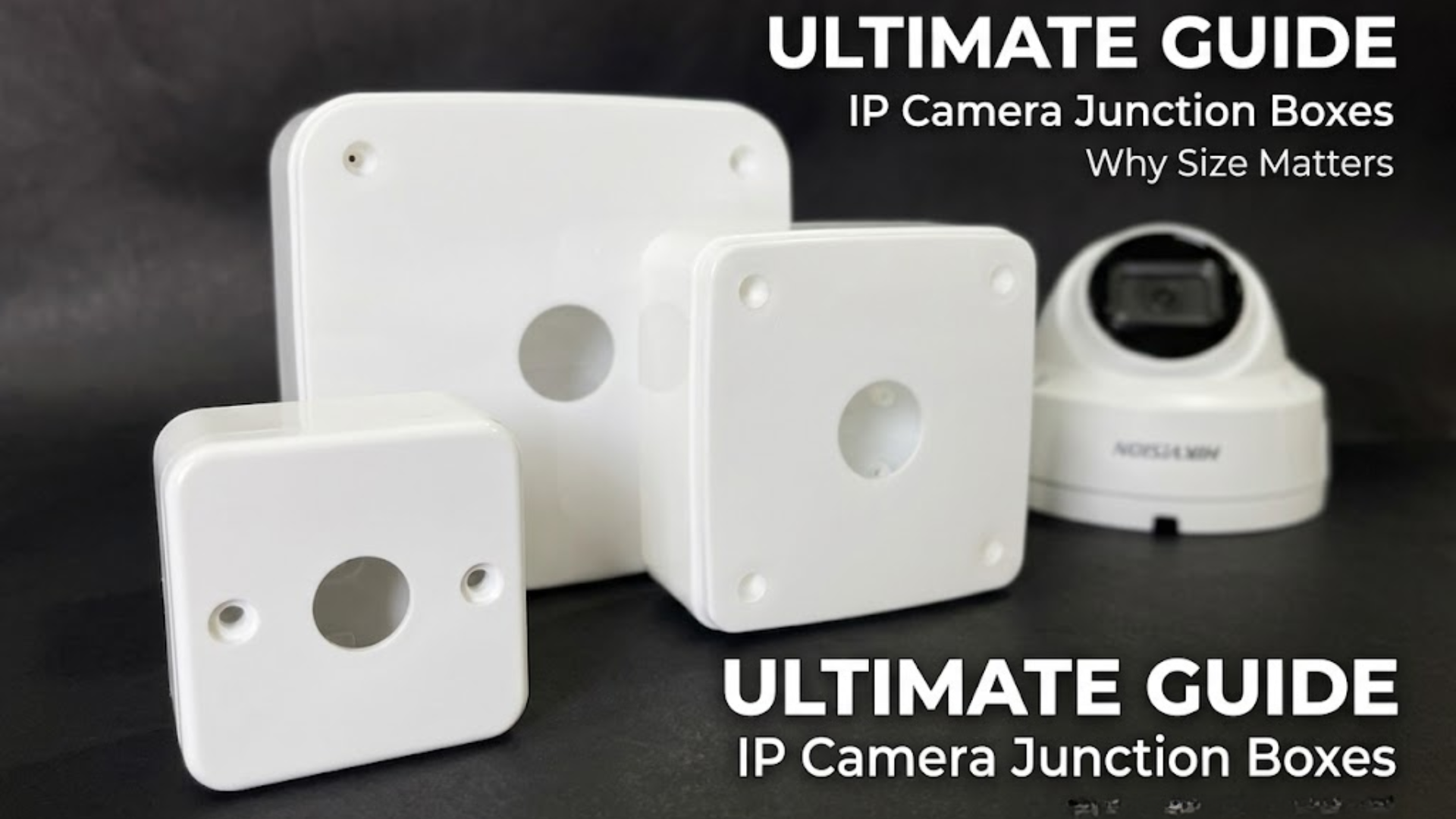
In today’s world, security is no longer optional—it has become an essential part of every home, office, shop, and commercial property in India. While many people focus on choosing a high-resolution CCTV or IP camera, they often ignore one of the most important accessories in the entire surveillance setup: the IP camera junction box.
A quality CCTV camera junction box not only protects your camera wiring from rain, dust, heat, and damage but also helps ensure safe and professional installation. Whether you are using Hikvision, CP Plus, Dahua, or Honeywell cameras, the right IP67 waterproof box can play a major role in improving durability, performance, and even protecting your product warranty.
What is an IP Camera Junction Box?
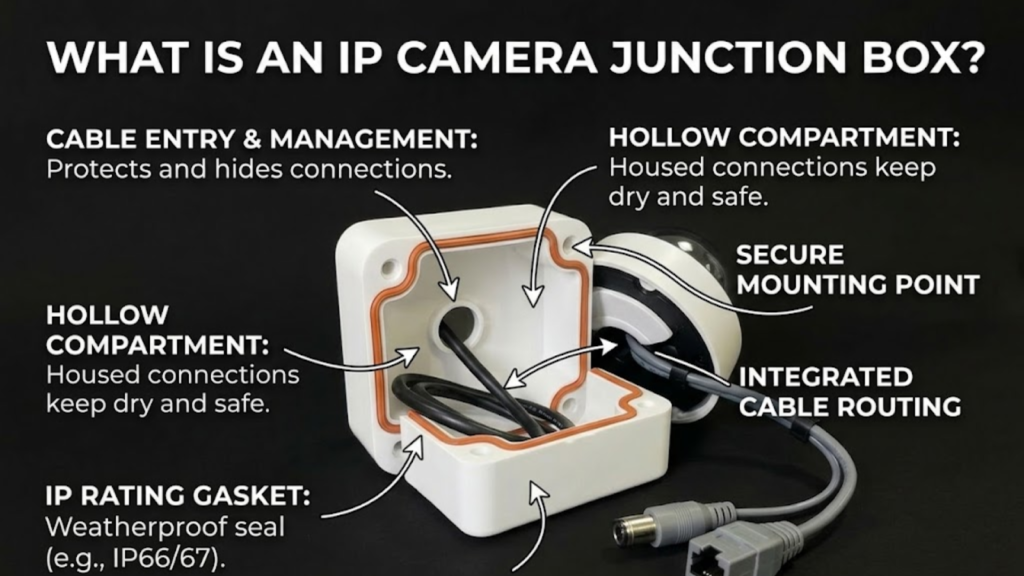
An IP camera junction box is a specialized enclosure designed to house the electrical connections (pigtails) of a security camera. It acts as a mounting base, providing a hollow space to tuck away the RJ45 Ethernet connector, the DC power jack, and the reset button.
Key Technical Specifications
| Feature | Standard Requirement | Why it Matters |
| Ingress Protection | IP66 or IP67 | Protects against heavy Indian monsoons and fine dust. |
| Material | SECC Steel or High-Grade ABS | Prevents rust and provides structural integrity. |
| Mounting Type | Wall, Pole, or Corner | Ensures the camera has the best field of view. |
| Cable Entry | Bottom or Side Glands | Prevents water from “running” down the wire into the box. |
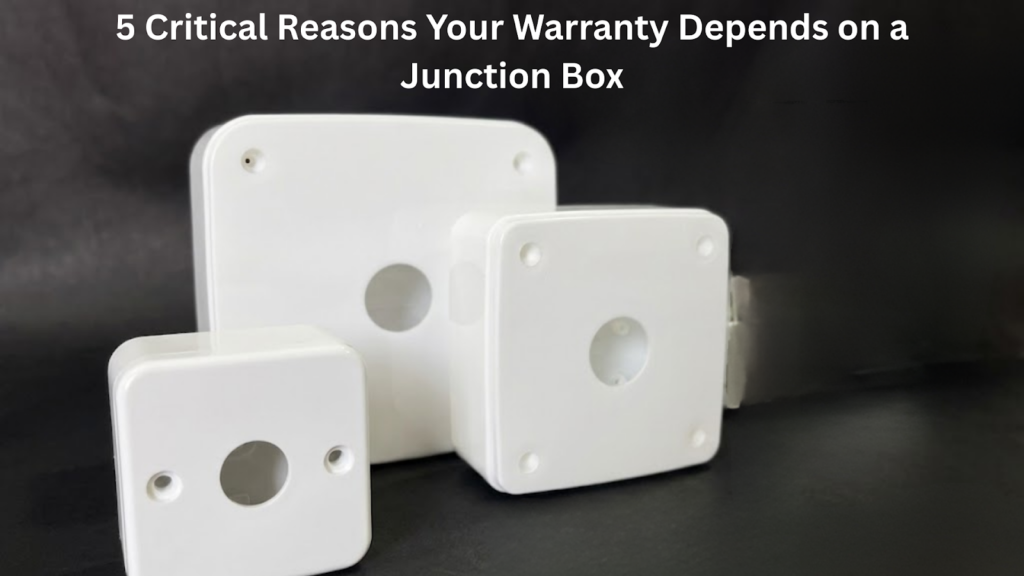
5 Critical Reasons Your Warranty Depends on a Junction Box
1. The “Water Ingress” Clause in Indian Warranties
Most Indian service centers for CCTV brands have a strict policy: “Damage due to liquid entry is not covered under standard warranty.” While the camera lens and body are sealed, the RJ45 connector (where the internet cable plugs in) is extremely vulnerable. In India, during the monsoon season, humidity levels can exceed 90%. Without an IP camera junction box, water droplets condense on the cable and slide directly into the connector via gravity. This leads to:
- Short circuits on the PoE (Power over Ethernet) pins.
- Corrosion of the copper contacts.
- Permanent motherboard failure.
Professional Tip: Always use a “Drip Loop” in your wiring before the cable enters the junction box.
2. Preventing “Green Corrosion” and Oxidation
Have you ever seen a copper wire turn green? This is oxidation. In coastal regions like Chennai or Kolkata, or even high-pollution areas like Delhi, the air is chemically aggressive.
- Without a box: The connectors are exposed to air. Oxidation increases electrical resistance, causing the camera to randomly restart or show “Video Loss.”
- With a box: The airtight seal of a quality IP camera junction box creates a micro-environment that keeps the copper pins shiny and conductive for years.
3. Structural Integrity and Cable “Pinching”
When a camera is mounted directly to a concrete wall, the installer often has to “stuff” the cables into a small hole in the wall or crush them behind the camera bracket.
- The Risk: This pressure can break the internal fiber/copper strands of the Cat6 cable.
- The Warranty Issue: If a technician sees “Physical Stress Marks” on the camera pigtail, they will mark it as Customer Induced Damage (CID) and void your warranty.
4. Protection Against High-Voltage Surges and Static
India faces frequent voltage fluctuations. An IP camera junction box made of aluminum or treated metal can act as a minor shield against electrostatic discharge (ESD). By providing a stable mounting surface, it ensures that the camera isn’t directly touching damp, conductive walls which could carry leakage current from other household appliances.
5. Vandalism and the “Professional Installation” Requirement
Many high-end brands like Axis or Bosch offer extended warranties only if the system is installed by a certified professional. A “Professional Installation” must include:
- Conduits for all wires.
- An IP camera junction box for every mounting point.
- Proper grounding.
Types of IP Camera Junction Boxes
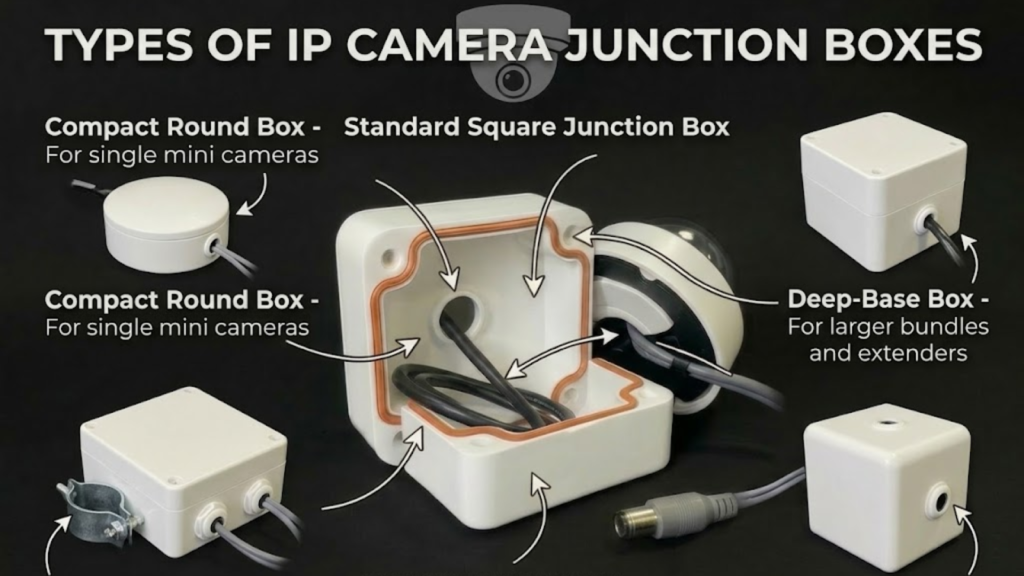
Depending on your project, you must choose the right type:
- Deep Base Junction Boxes: Ideal for cameras with long pigtails or when using PoE extenders.
- Pole Mount Brackets: Used for street lighting poles or perimeter fencing.
- Corner Mount Boxes: Essential for getting a 270-degree view of a building’s exterior.
- Rain Shields: An added layer of protection for cameras facing direct, heavy rainfall.
Comparison: Plastic vs. Metal Junction Boxes
| Feature | Plastic (ABS) Box | Metal (Aluminum/Steel) Box |
| Durability | Moderate (can crack in extreme sun) | High (Vandal-resistant) |
| Price | Very Affordable | Premium |
| Best Use Case | Indoor or Shaded areas | Outdoor, High-security zones |
| Weight | Lightweight | Heavy (requires solid mounting) |
Frequently Asked Questions (FAQ)
Q1: Can I use a standard electrical PVC box instead of an IP camera junction box?
Answer: While possible, it is not recommended. Standard PVC boxes are not UV-rated and will become brittle and crack under the Indian sun within 12 months. Genuine camera junction boxes have pre-drilled holes that perfectly match the camera’s base.
Q2: Does every IP camera come with a junction box in the box?
Answer: Usually, no. Most manufacturers sell them as separate accessories. You must check the “Base Diameter” of your camera to ensure the box matches.
Q3: How do I know if a junction box is truly waterproof?
Answer: Look for the IP Rating. An IP66 rating means it can withstand high-pressure water jets. Also, check for a rubber gasket (seal) around the lid.
Best Practices for Installing an IP Camera Junction Box
- Apply Silicon Sealant: Even with a gasket, applying a thin layer of weatherproof silicon around the rim adds an extra 5 years of life.
- Use Cable Glands: Never leave the side holes open. Use waterproof cable glands to seal the entry point of the Cat6 wire.
- Label Your Cables: Inside the box, use a small tag to label the camera ID. This makes troubleshooting 10x faster.
- Mounting Height: Ensure the box is mounted at least 9 feet high to prevent manual tampering.
Conclusion
Don’t let a ₹500 saving ruin a ₹5,000 camera. Using a high-quality IP camera junction box is the only way to ensure your surveillance system survives the harsh Indian climate and remains eligible for warranty repairs.