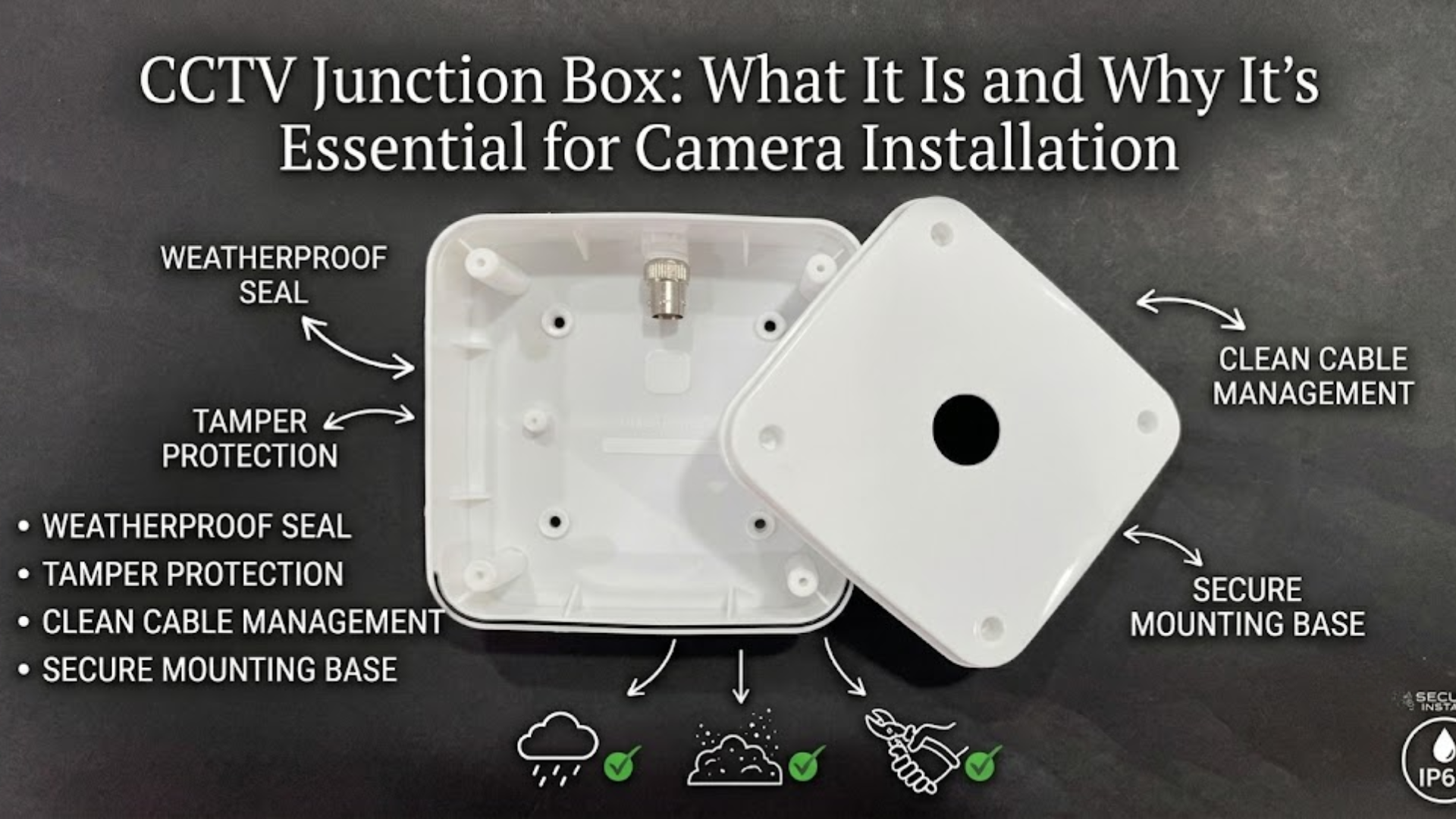
A CCTV junction box is the single most critical component for ensuring a reliable, long-lasting security camera system. When property owners invest in surveillance, their focus naturally gravitates toward camera resolution, night vision ranges, and lens types. Yet, seasoned security technicians know that over 70% of premature camera failures stem directly from exposed, corroded, or damaged wiring—not faulty camera hardware.
A dedicated CCTV junction box resolves this vulnerability by acting as a fortified enclosure that protects sensitive electrical connections from physical interference and environmental degradation.
What is a CCTV Junction Box?
A CCTV junction box is a weatherproof enclosure mounted directly between the installation surface (wall, ceiling, or pole) and the security camera. Its primary function is to house, conceal, and protect critical cable terminations—including RJ45 Ethernet jacks (PoE), DC barrel power plugs, BNC connectors, and video baluns.
Without this enclosure, camera pigtail cables must either be stuffed into an oversized hole in the wall or left exposed to the elements. The junction box provides a flat, structured base where the camera mounts cleanly on the lid, running all wiring through a sealed internal cavity straight into conduit piping.
5 Core Reasons a CCTV Junction Box Is Essential
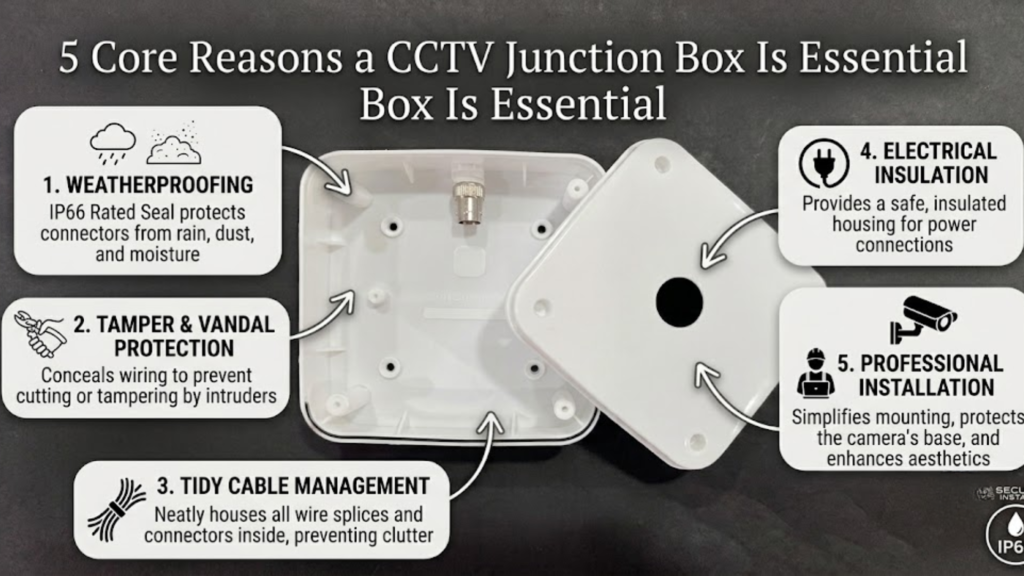
Skipping the junction box to save a few dollars leaves an expensive surveillance system vulnerable to preventable failure. Integrating a purpose-built enclosure delivers five distinct operational advantages:
- Complete Weatherproofing and Moisture Defense: Rain, condensation, and seasonal humidity corrode unprotected copper pins and connectors. This corrosion leads to intermittent video drops, power surges, or permanent port burnouts. Quality junction boxes utilize rubber silicone gaskets (IP66/IP67 rated) to create an airtight seal against water and dust.
- Tamper Resistance and Anti-Vandalism: If an outdoor camera is mounted within arm’s reach, an intruder can easily sever an exposed pigtail cable in seconds. A junction box runs the wiring directly through the rear of the camera base into the sealed enclosure, leaving zero accessible wire surface for vandals to cut.
- Streamlined Cable Management: Excess cable slack bundled with zip ties looks unprofessional and degrades over time under direct UV exposure. A junction box houses all extra loop length neatly inside, presenting a flush, clean installation.
- Simplified Maintenance and Upgrades: When a camera fails or requires an upgrade, technicians only need to open the front cover of the junction box to access the connectors. There is no need to chisel into concrete, pull recessed drywall wiring, or replace entire cable runs.
- Structural Mounting Stability: Uneven brickwork, coarse stucco, and stone facades make it difficult to mount cameras level. A rigid junction box creates a uniform, flat surface that prevents camera drift, vibration, and loosened anchor screws.
Material Comparison: PVC vs. Die-Cast Aluminum
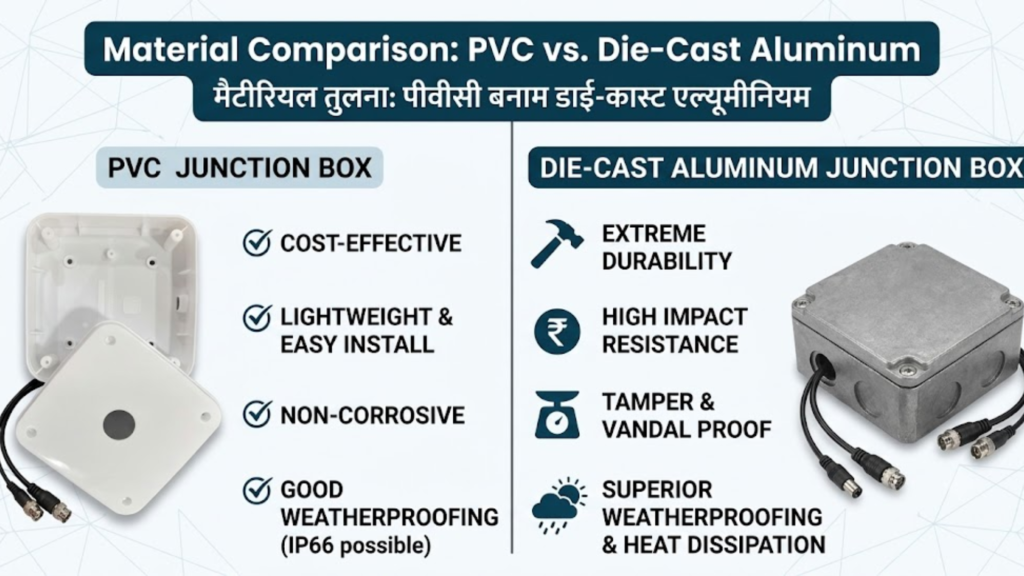
Selecting the right build material depends on the camera location and environmental demands:
| Feature | ABS / PVC Plastic Junction Box | Die-Cast Aluminum Junction Box |
| Impact Resistance | Moderate (Sufficient for residential) | High (Vandal and drill-resistant) |
| Rust & Corrosion | Completely non-corrosive | Powder-coated; highly resistant |
| UV Resistance | High (if UV-stabilized ABS) | Complete immunity to UV breakdown |
| Typical Deployment | Indoor hallways, covered soffits, homes | Perimeter walls, industrial sites, retail |
| Cost Profile | Economical | Commercial Grade |
Key Factors When Choosing a CCTV Junction Box
- Form Factor Match: Dome cameras require circular base boxes matched to the camera’s base diameter (e.g., 100mm to 130mm). Bullet cameras generally use deep square boxes (4×4 inches) or specialized universal mounting plates.
- Ingress Protection (IP Rating): For any outdoor deployment, choose a minimum rating of IP66. Verify that the unit includes a continuous perimeter rubber gasket and sealed screw caps.
- Grommet Placement: Always ensure the conduit entry points face downward or directly through the back. Never install a junction box with the pipe entry facing upward, as gravity will inevitably channel moisture past the threading.
Frequently Asked Questions
Is a CCTV junction box necessary for indoor cameras?
While indoor environments lack rain, junction boxes are still recommended for concrete or hard surfaces where drywall cavity space is unavailable, ensuring a tidy, tamper-proof finish.
Do all cameras fit any junction box?
No. Camera mounting hole patterns vary by manufacturer. You should either purchase the manufacturer’s matching junction box model or a universal security junction box equipped with multi-pattern pre-drilled lids.
Can cables be routed through metal conduit directly into the box?
Yes. Most commercial metal and PVC boxes feature standardized threaded knockouts (typically 1/2-inch or 3/4-inch NPT) designed specifically for direct conduit integration.