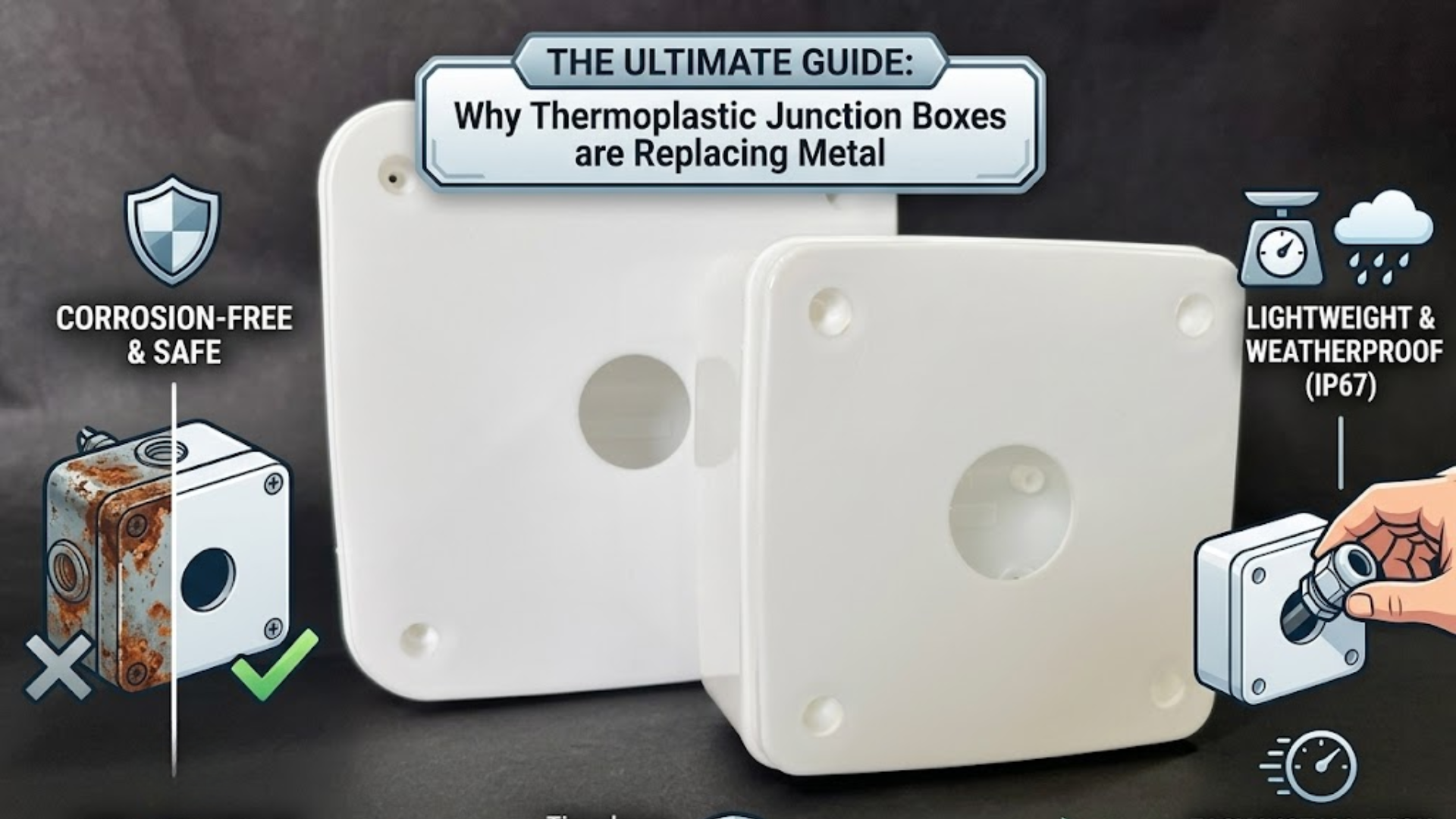
In the rapidly evolving landscape of Indian infrastructure—from Smart City projects to massive industrial corridors—the choice of electrical components is no longer just about “what works.” It is about longevity, safety, and ROI.For decades, Galvanized Iron (GI) and Cast Iron (CI) were the default choices. However, a significant shift is occurring. Thermoplastic junction boxes are systematically replacing metal enclosures across residential, commercial, and heavy-industrial sectors.
This guide explores every technical and practical reason behind this transition, providing a clear roadmap for engineers, contractors, and builders.Thermoplastic junction boxes
1. Understanding the Material Science Behind Thermoplastic Junction Box
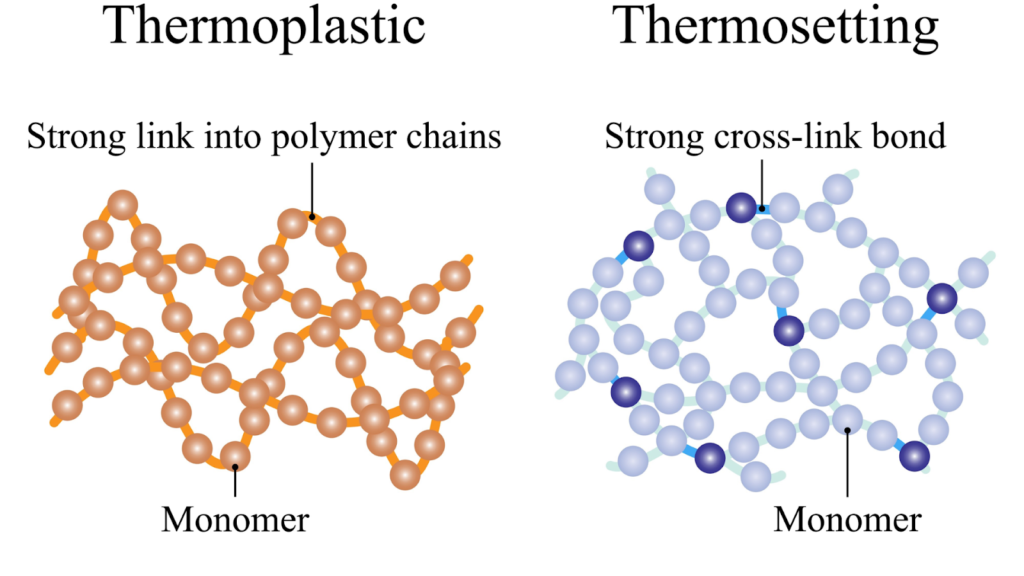
Before diving into the benefits, it is essential to understand that not all plastics are created equal. A “thermoplastic” is a polymer that becomes pliable or moldable at a certain elevated temperature and solidifies upon cooling.
Common Materials Used:
- Polycarbonate (PC): The “Gold Standard.” It offers the highest impact resistance and is virtually unbreakable.
- ABS (Acrylonitrile Butadiene Styrene): A cost-effective alternative with good structural strength and chemical resistance.
- Polystyrene: Used for lighter, indoor applications where extreme durability isn’t the primary concern.
- GRP (Glass Reinforced Polyester): While technically a thermoset, it is often grouped here for its non-metallic advantages in heavy-duty sectors.
2. Thermoplastic Junction Box: Core Advantages & Why the Switch?
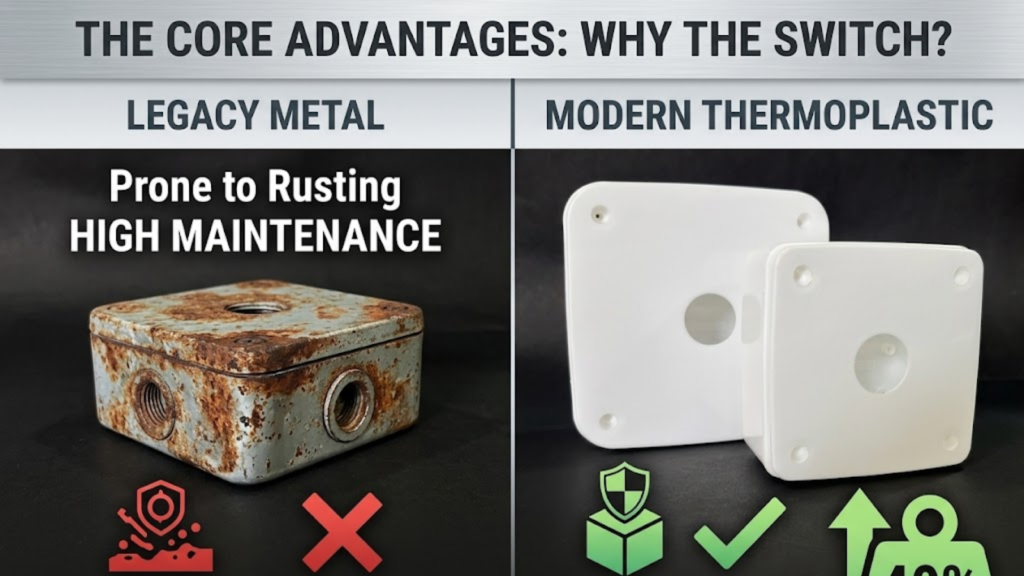
The transition from metal to thermoplastic isn’t just a trend; it’s a technical upgrade. Here are the detailed pillars of why thermoplastic wins:
A. Total Corrosion Resistance
India has a diverse climate, but much of our industrial activity happens in coastal or high-humidity zones.
- The Metal Struggle: GI boxes rely on a thin layer of zinc. Once scratched during installation, the steel underneath oxidizes. In cities like Mumbai, Kolkata, or Chennai, a metal box can show structural failure within 24 months.
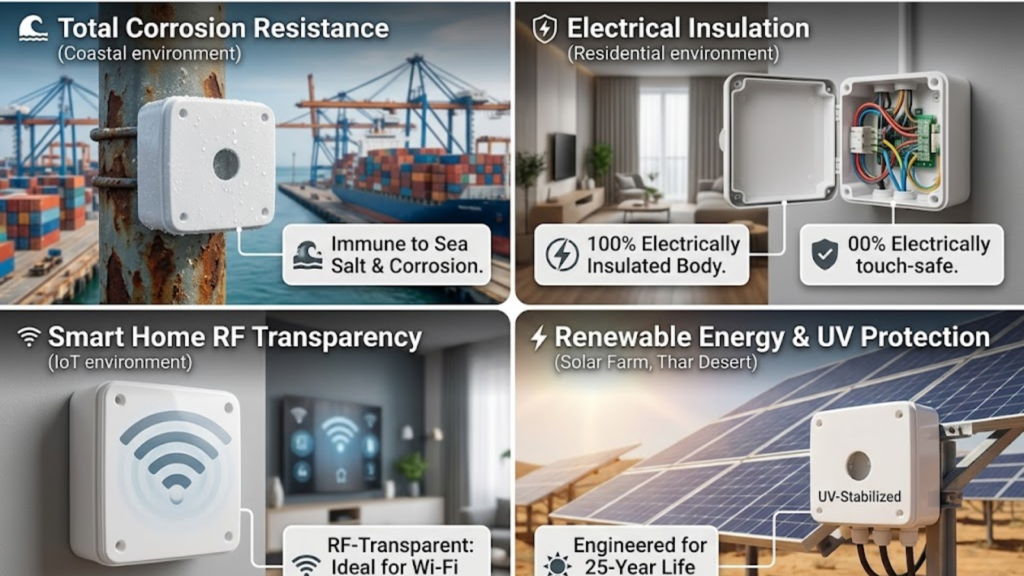
- The Thermoplastic Solution: These boxes are inherently inert. They do not react with water, salt, or most industrial chemicals. This makes them “Fit and Forget” solutions.
B. Electrical Insulation & Safety (The 100% Protection)
In India, “earthing” (grounding) is often a weak point in electrical installations due to poor soil conditions or improper maintenance.
- Direct Hazard: In a metal box, a single loose wire touching the body turns the entire enclosure into a lethal conductor.
- The Plastic Shield: Thermoplastic is a non-conductive material. It provides “Double Insulation.” Even if internal wiring fails, the exterior remains safe to touch, preventing fatal accidents in homes and factories.
C. Thermal Stability and Fire Retardancy
A common misconception is that plastic is a fire hazard.
- Fact: High-quality thermoplastic junction boxes are Flame Retardant. They are tested using the “Glow Wire Test” (often up to 650°C or 960°C). They do not support combustion and are self-extinguishing.
3. Detailed Comparison: Thermoplastic vs. Traditional Metal
| Feature | Thermoplastic (PC/ABS) | Galvanized Iron (GI) | Stainless Steel (SS) |
| Weight | Very Lightweight | Heavy | Very Heavy |
| Corrosion Resistance | Excellent (Immune) | Poor (Rusts over time) | Good (But expensive) |
| Installation Speed | Fast (Knockouts/Easy drill) | Slow (Needs punching/filing) | Very Slow |
| Electrical Safety | Insulated (Best) | Conductive (Needs Earth) | Conductive (Needs Earth) |
| RF Transparency | Transparent (Good for Wi-Fi) | Blocks Signals | Blocks Signals |
| Maintenance | Zero | High (Painting/Cleaning) | Low |
| Initial Cost | Moderate | Low | Very High |
4. Specialized Use Cases in the Indian Context
I. Residential & Smart Homes
With the rise of IoT and home automation, junction boxes now house sensitive PCB boards and Wi-Fi modules.
- Signal Strength: Metal boxes act as a “Faraday Cage,” blocking Wi-Fi and Bluetooth signals. Thermoplastic allows signals to pass through, making them ideal for smart switches.
II. Solar Power Plants (Renewable Energy)
India is a global leader in solar. Solar arrays are exposed to 365 days of UV radiation and rain.
- UV Resistance: Using UV-Stabilized thermoplastic ensures the box doesn’t become brittle or “chalky” under the harsh Indian sun.
III. Coastal and Marine Engineering
From ports to desalination plants, the salt-laden air destroys metal. Thermoplastic junction boxes with IP67 ratings are the only viable long-term solution here.
5. Technical Specifications: What to Look For (The Checklist)
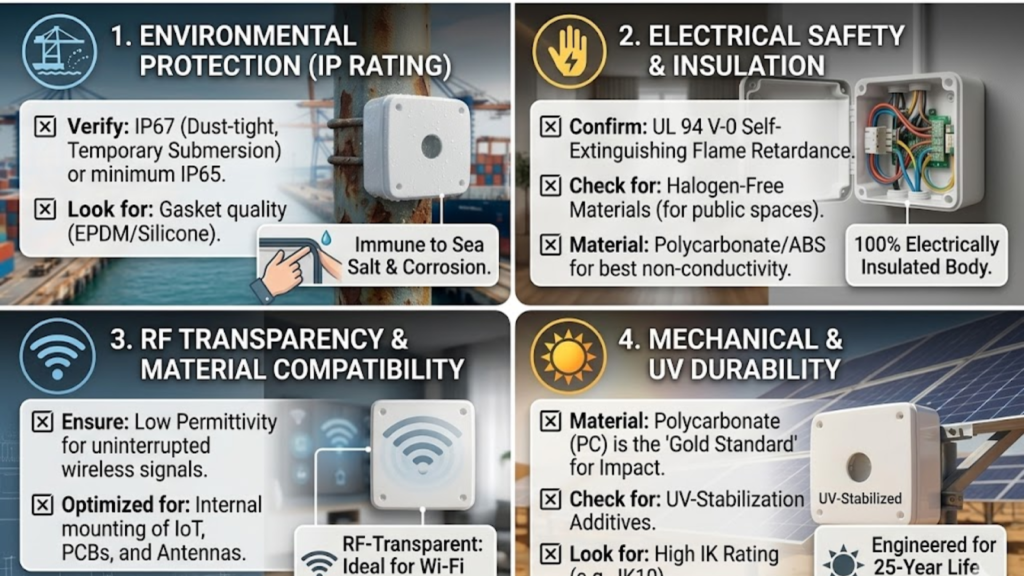
When procurement teams in India look for “thermoplastic junction boxes,” they must verify these technical markers:
- IP Rating (Ingress Protection):
- IP65: Protection against dust and water jets.
- IP66: Protection against heavy seas or powerful jets.
- IP67: Temporary immersion in water.
- IK Rating (Impact Protection): Look for IK08 or higher. This ensures the box can withstand mechanical impacts (like a hammer blow or falling debris) without cracking.
- Halogen-Free: In case of a fire, halogen-free materials do not release toxic, acidic gases, which is vital for public spaces like malls or metro stations.
- Gasket Quality: Ensure the seal is made of EPDM or Silicone to maintain the IP rating over years of heat cycles.
6. Thermoplastic Junction Box Installation Best Practices for 25-Year Life
A high-quality thermoplastic junction box is only as good as its installation. Even an IP67-rated box will leak if the entry points are handled poorly. Follow these professional standards to ensure your electrical network remains “bulletproof.”
A. Precision Entry: Using the Right Tools
Unlike metal boxes that require heavy-duty hole saws or manual punching (which often leaves jagged, rust-prone edges), thermoplastic is easy to work with—but requires a steady hand.
- Step Drill Bits: Always use a “step drill bit” to create entries. This ensures a perfectly circular hole without cracking the surrounding material.
- Clean the Burrs: After drilling, use a deburring tool or fine sandpaper to smooth the edges. A rough edge can tear the rubber gasket of your cable gland, leading to water seepage.
- Avoid Over-drilling: If the box has pre-molded “knockouts,” use a rubber mallet to gently pop them out rather than forcing them with a screwdriver, which can cause stress fractures.
B. Maintaining the IP Rating (The “Gland” Rule)
The most common point of failure in Indian electrical sites is the “open entry”—where a wire is simply pushed through a hole.
- Mandatory Cable Glands: To maintain an IP65 or IP66 rating, you MUST use a thermoplastic or brass cable gland. This creates a 360-degree compression seal around the cable.
- Size Matching: Ensure the gland size (PG or Metric) matches your cable diameter perfectly. A loose gland is as bad as no gland at all.
- Gland Positioning: Whenever possible, entries should be made from the bottom of the box. This prevents gravity from pulling rainwater directly into the seal.
C. Mounting Strategies: Protecting the “Back-Plane”
Many installers make the mistake of drilling through the back of the box to screw it onto a wall. This creates a direct path for moisture to enter.
- Internal Mounting Pillars: High-quality thermoplastic boxes come with internal “bosses” or pillars. Use these to mount your DIN rails or terminal blocks.
- External Mounting Feet: If the box is going on a damp wall, use “external mounting brackets.” These clip onto the side of the box, allowing you to screw it to the wall without ever piercing the main enclosure body.
- Clearance: Maintain a small gap (using spacers) between the box and the wall in outdoor settings. This prevents “capillary action” where water gets trapped behind the box and causes wall dampness.
D. Managing Condensation (The “Breather” Concept)
In cities with high temperature swings (like Delhi or Jaipur), the air inside the box can condense into water droplets, even if the box is perfectly sealed from the rain.
- Ventilation Plugs: For large outdoor enclosures, install a “Breather Drain” or a ventilation plug. This allows the box to “breathe” (equalizing pressure and releasing moisture) while still keeping dust and liquid out.
- Silica Gel Packets: For sensitive electronics inside the box, placing a small industrial-grade silica gel packet can absorb initial moisture during the monsoon season.
E. Lid Alignment and Torque Management
Thermoplastic expands and contracts slightly with heat.
- Cross-Pattern Tightening: When closing the lid, tighten the screws in a “cross” or “diagonal” pattern (like car wheel bolts). This ensures the gasket is compressed evenly across all four sides.
- Don’t Over-Torque: Using a high-speed power drill to tighten lid screws can strip the plastic threads. Use a manual screwdriver for the final turn to ensure a snug, but not crushed, seal.
Frequently Asked Questions (FAQ)
Q1: Will thermoplastic melt in the high temperatures of Rajasthan or Central India? Ans: No. Industrial-grade thermoplastics like Polycarbonate have a service temperature range of -40°C to +120°C. Even in 50°C peak summer, the material remains structurally sound.
Q2: Is metal stronger than thermoplastic? Ans: While metal is “harder,” thermoplastic is often “tougher.” Metal dents and deforms permanently upon impact. High-impact thermoplastic (IK08+) absorbs the energy and returns to its original shape.
Q3: Is it more expensive than GI boxes? Ans: The initial purchase price might be 10-20% higher than low-grade GI. However, when you factor in zero maintenance, zero painting, and faster installation labor, the “Total Cost of Ownership” is significantly lower.
Q4: Can these boxes be used for underground wiring? Ans: Yes, provided they are IP68 rated. They are excellent for garden lighting and underground cable joints because they will never rot or leak.