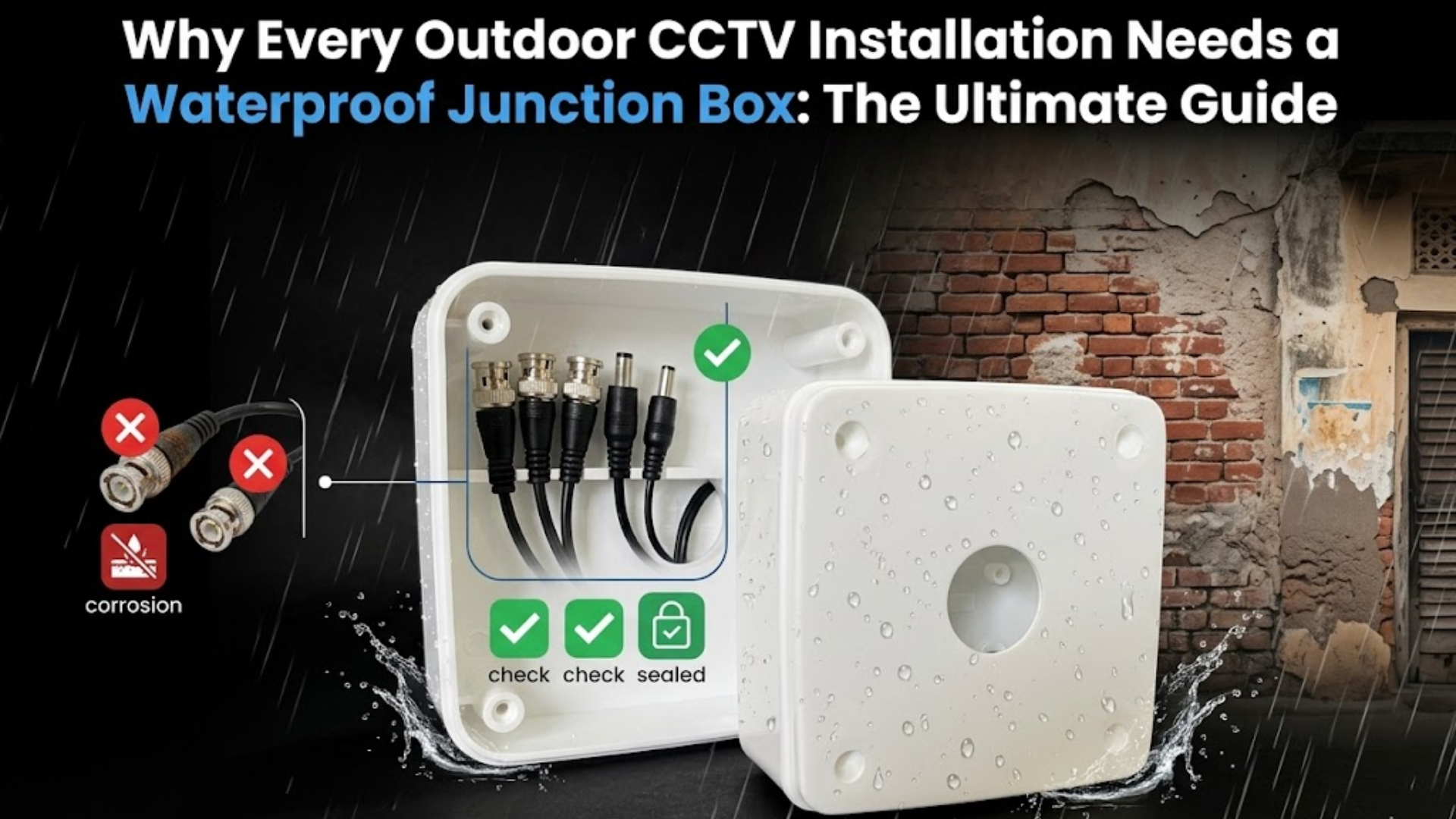
In the modern security landscape, installing a high-definition CCTV camera is only half the battle. The real challenge lies in durability. Whether you are securing a villa in Jaipur, a retail store in Mumbai, or a warehouse in Delhi, the Indian climate—characterized by monsoon rains, extreme summer heat, and heavy dust—is the biggest enemy of electronics.Targeting the right hardware, specifically a waterproof box for CCTV camera, is the difference between a system that lasts ten years and one that fails in ten months.
1. Understanding the Core Problem: Vulnerable Connections
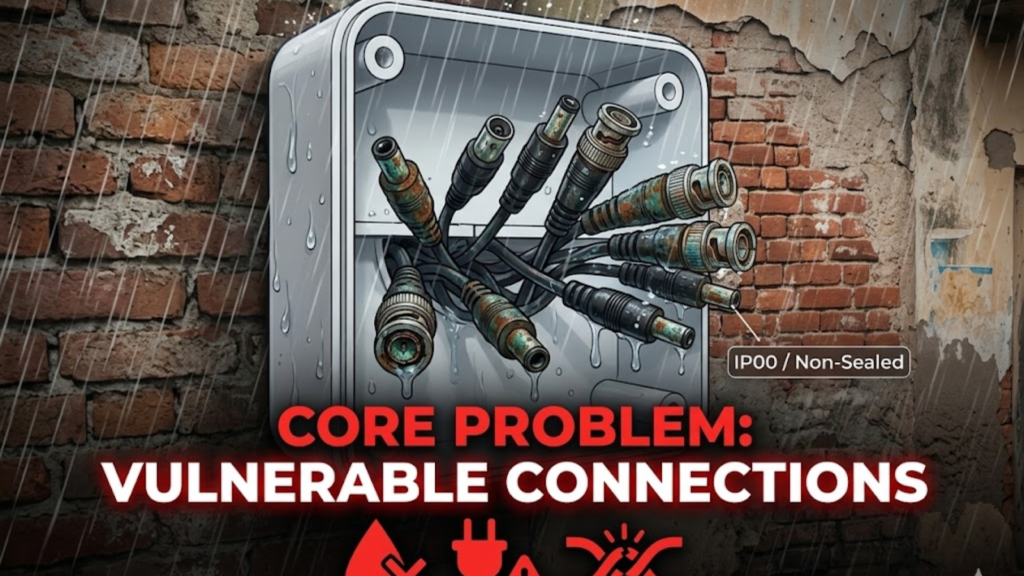
Most outdoor CCTV cameras (Bullet or Dome) are rated IP66 or IP67, meaning the camera body itself is waterproof. However, the “tail” of the camera—where the BNC connector, DC power pin, or RJ45 Ethernet plug sits—is not waterproof.
Why the ‘Tail’ is at Risk:
- Capillary Action: Rainwater can travel along the cable and seep into the connectors.
- Oxidation: Moisture in the air causes the copper pins to turn green (oxidation), leading to video loss.
- Short Circuits: Water bridging the power pins can fry the camera’s internal motherboard.
2. Technical Specifications Comparison
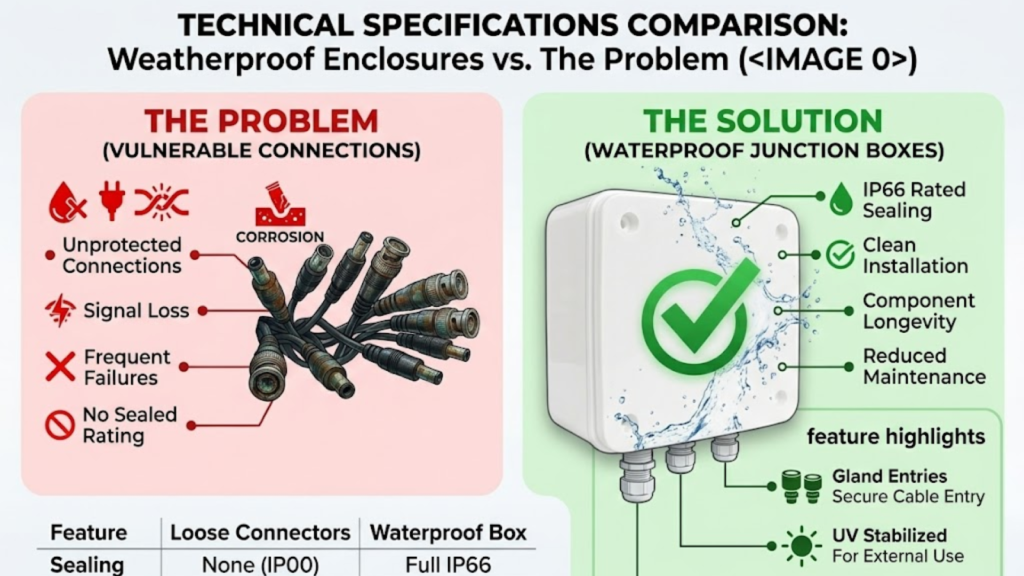
When searching for a waterproof box for CCTV camera, you will encounter various terms. Use this table to understand what you actually need:
CCTV Junction Box Comparison Table
| Feature | Standard PVC Box | Weatherproof ABS Box | Professional Aluminum Enclosure |
| Water Resistance | Low (Splash only) | High (IP65/66 Rated) | Extreme (IP67 Rated) |
| Durability | Becomes brittle in sun | UV Resistant (Long life) | Vandal Proof / Heavy Duty |
| Best For | Indoor / Corridors | Outdoor Residential | Industrial / High Security |
| Rust Proof | Yes | Yes | If powder-coated |
| Price Point | Budget Friendly | Mid-Range (Recommended) | Premium |
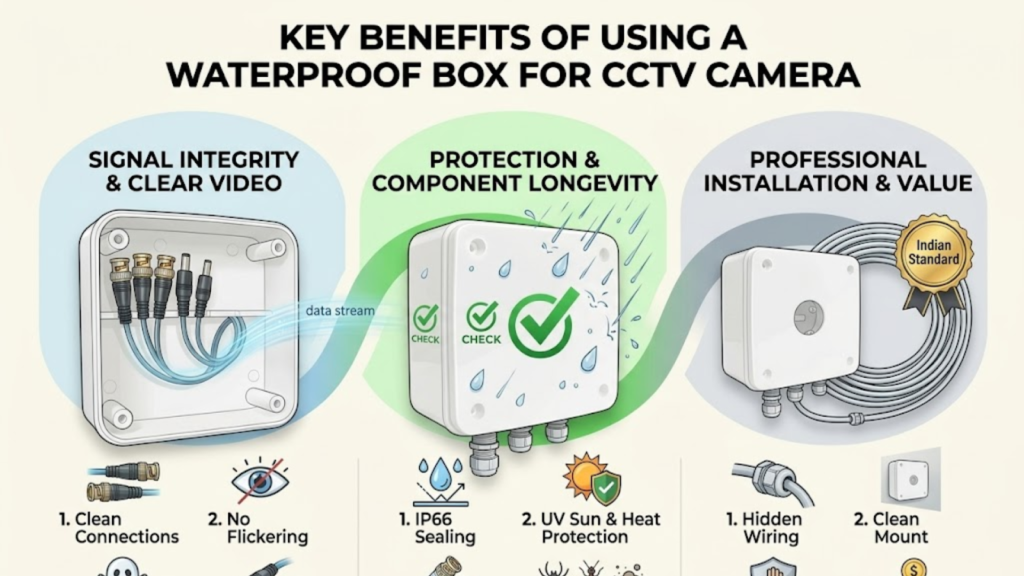
3. Key Benefits of Using a Waterproof Box for CCTV Camera
A. Signal Integrity and Video Quality
A waterproof box for CCTV camera ensures that the joint between the camera and the main cable remains bone-dry. In India, many users complain about “ghosting” or “lines” on their screen during the rainy season. This is almost always due to moisture at the connector point.
B. Protection Against Nesting and Insects
Open wires are an invitation for spiders, wasps, and ants. Insects love the warmth generated by DC power. They build nests inside the connectors, which can cause overheating and signal interference. A sealed box keeps the “creepy crawlies” out.
C. Aesthetic and Professional Appeal
A bunch of taped-up wires hanging from a wall looks unprofessional and decreases the property value. A junction box allows for:
- Hidden Wiring: All extra loops are tucked inside.
- Clean Mounting: The camera is often mounted directly on the box, creating a seamless look.
4. Step-by-Step Installation Best Practices: A Masterclass
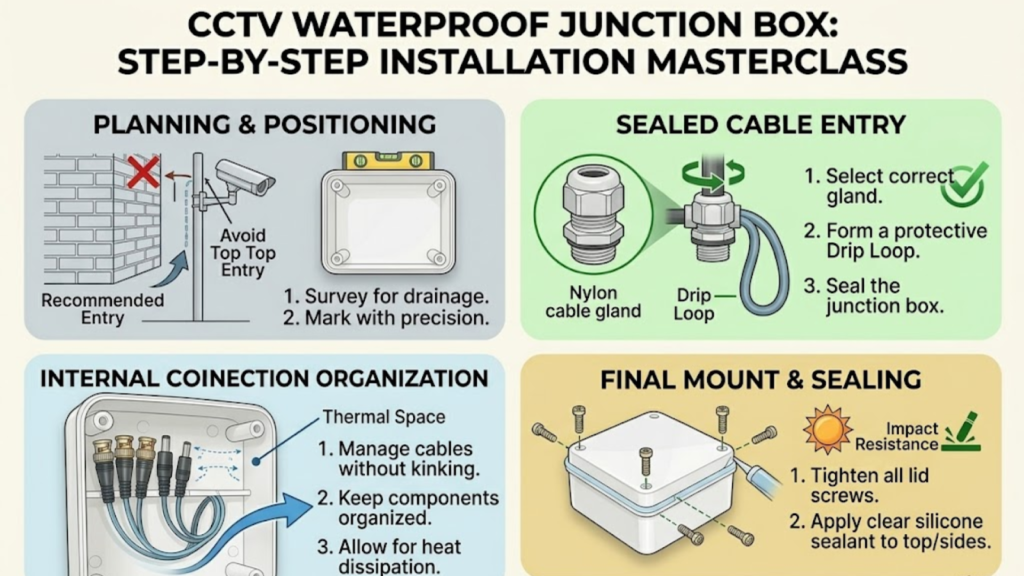
Installing a waterproof box for CCTV camera isn’t just about screwing it into a wall; it is about creating a vacuum-sealed environment that defies the elements. Here is a deep dive into the professional installation process:
A. Precise Gland Selection and Management
The entry point of the cable is the most common failure point. You must use Rubber Grommets or Nylon Cable Glands.
- Why it matters: Without a gland, the hole you drill into the box becomes a highway for moisture and insects.
- The Technique: Tighten the gland until it firmly grips the cable jacket. This creates a “crush seal” that is airtight. If your box has pre-drilled knockouts, ensure you only open the ones you are using. Any unused holes should be plugged with high-grade silicone sealant to maintain the IP66 rating.
B. The Science of the “Drip Loop”
This is the single most important trick used by professional installers in India to combat heavy Monsoon rains.
- The Concept: Never run a wire straight from the pole or wall into the box. Instead, let the wire hang down in a small “U-shape” or loop before it turns upward to enter the junction box.
- The Result: Gravity is your friend here. Rainwater traveling down the cable will reach the bottom of the “U” and drip onto the ground. If you don’t have this loop, the water will follow the cable directly into the seal of your waterproof box for CCTV camera, eventually forcing its way inside.
C. Strategic Positioning and Orientation
Orientation can determine the lifespan of your electronics.
- Entry Points: Always ensure the cable enters the box from the bottom or the side. Never enter from the top. Even the best waterproof seals can fail under standing water; by entering from the bottom, you ensure that gravity pulls water away from the opening.
- Wall Surface Prep: In regions like Rajasthan, walls are often made of uneven stone or rough plaster. Before mounting the box, ensure the surface is flat. If there are gaps between the box and the wall, use a weather-resistant caulk to prevent water from seeping behind the box, which can lead to wall dampness and mold.
D. Internal Component Organization
A cluttered box is a heat trap. When placing your connectors inside:
- Avoid Tight Bends: Bending your BNC or Cat6 cables too sharply can cause “Micro-fractures” in the copper core, leading to intermittent video loss.
- Heat Dissipation: If you are placing a small DC power adapter inside the waterproof box for CCTV camera, ensure it isn’t touching the plastic sides. Electronic components generate heat, and in the peak Indian summer (45°C+), a cramped box can lead to thermal shutdown. Leave at least 20% “air space” inside the box for circulation.
E. Final Sealing and “The Silicon Touch”
Once the wiring is complete and the camera is mounted:
- Gasket Inspection: Ensure the rubber O-ring or gasket of the box is seated perfectly in its groove. A pinched gasket is the same as having no gasket at all.
- Screw Tension: Tighten the lid screws in a “star pattern” (top-left, bottom-right, etc.) to ensure even pressure across the seal.
- Pro-Tip: Apply a thin bead of Clear RTV Silicone around the top and side seams of the box after closing it. Leave the bottom seam open so that in the rare event that condensation forms inside, it has a way to evaporate out.
Frequently Asked Questions (FAQ)
Q1: Can I just use electrical tape instead of a waterproof box? A: No. Electrical tape eventually loses its adhesive properties due to heat and UV exposure. It traps moisture inside rather than keeping it out, which accelerates corrosion.
Q2: Does the box affect the Wi-Fi signal for Wireless Cameras? A: If you use a plastic/ABS waterproof box, the signal degradation is negligible. However, avoid thick metal boxes for Wi-Fi cameras as they act as a Faraday cage and block signals.
Q3: What is the ideal size for a CCTV junction box? A: For standard 2MP/5MP cameras, a 4×4 inch (100x100mm) box is usually sufficient to house the connectors and a small power adapter.
Q4: Is it necessary for cameras installed under a roof/balcony? A: Yes. Even if direct rain doesn’t hit it, humidity and wind-blown dust can still damage the connectors over time.