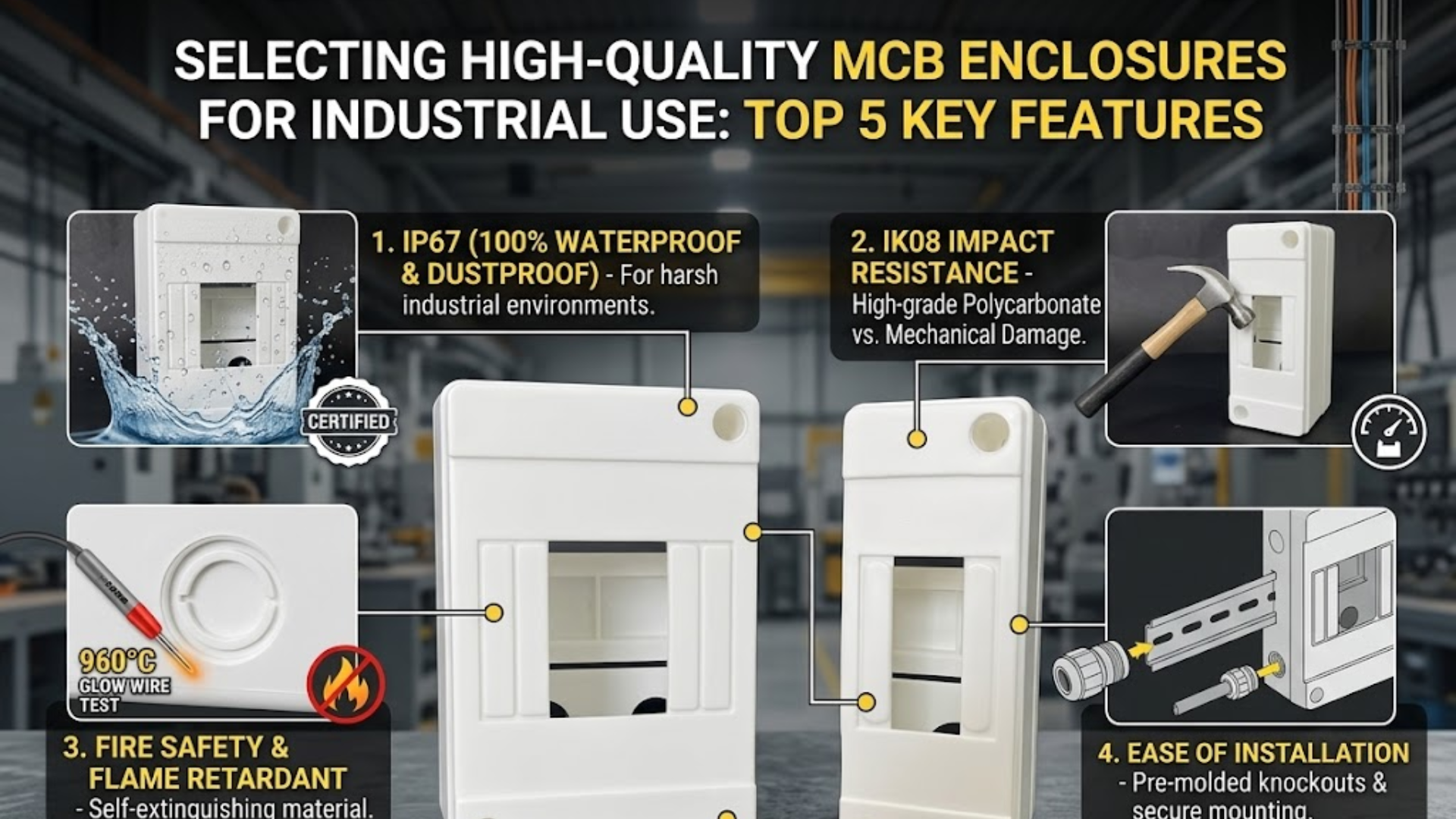
In the rapidly evolving industrial landscape of India—from the automated factories in Pune to the solar hubs in Jaipur—electrical safety is no longer a luxury; it is a fundamental necessity. Central to this safety architecture is the MCB enclosure junction box.
While many view it as a simple “plastic or metal box,” engineers and facility managers know that the right enclosure is the first line of defense against electrical fires, equipment failure, and costly downtime. In this guide, we dive deep into the top features, technical specifications, and selection criteria that define a high-quality enclosure.
1. Understanding the Role of an MCB Enclosure Junction Box
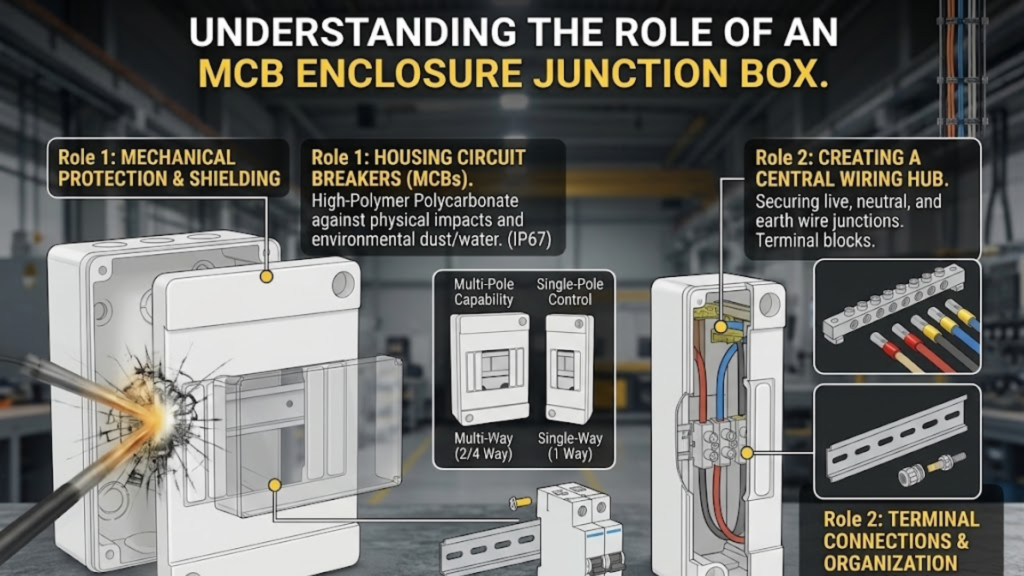
Before we jump into the features, it is vital to understand why the MCB enclosure junction box is the heart of your electrical distribution. Its primary job is to house Miniature Circuit Breakers (MCBs) and provide a secure point for wire junctions.
Key Functions:
- Environmental Shielding: Protecting sensitive internal switches from dust, humidity, and chemical vapors.
- Mechanical Protection: Preventing physical damage from tools, machinery, or accidental impacts.
- User Safety: Ensuring that operators can toggle switches without coming into contact with live wires.
- Organization: Providing a structured layout for complex wiring using DIN rails and terminal blocks.
2. Top 5 Features for Industrial Excellence
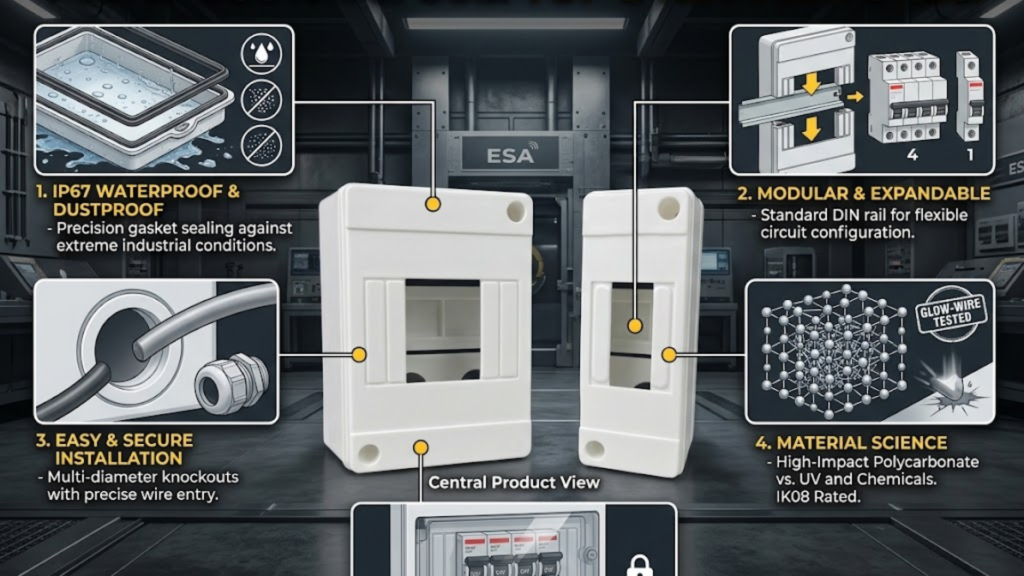
I. Advanced IP and IK Ratings
In an industrial setting, the environment is your biggest enemy. Whether it’s fine cement dust or high-pressure water jets used for cleaning, your enclosure must be a fortress.
- IP67 Certification: This is the gold standard. It means the unit is 100% protected against dust ingress and can withstand immersion in water up to 1 meter. For Indian monsoons or coastal humidity, anything less than IP65 is a risk.
- IK08 Impact Resistance: Industrial floors are busy. Dropped tools or moving trolleys can crack a weak box. A high IK rating ensures the enclosure can absorb kinetic energy without shattering.
II. High-Grade Thermoplastic Material (Polycarbonate)
While metal boxes were traditional, High-Impact Polycarbonate (PC) has taken over the industrial sector.
- Why PC? Unlike Metal/CRCA, Polycarbonate does not rust. In chemical plants or areas with high salinity, a metal box will corrode within months, whereas a PC MCB enclosure junction box remains intact for decades.
- UV Stabilization: For outdoor solar installations, the enclosure must be UV-protected to prevent “yellowing” or becoming brittle under the harsh Indian sun.
III. Thermal Management and Fire Retardancy
Electricity generates heat. If a terminal becomes loose, it can create a localized “hot spot.”
- Glow Wire Test (960°C): Quality enclosures are tested to ensure that even if an internal component catches fire, the enclosure material will not support the flame and will self-extinguish.
- Heat Dissipation: A well-designed box has enough internal “air-volume” to prevent the MCBs from tripping prematurely due to ambient heat buildup.
IV. Ergonomic Installation Features
Time is money during a factory shutdown or a new installation.
- Adjustable DIN Rails: High-quality boxes feature galvanized steel DIN rails that allow for easy snapping of MCBs, RCCBs, and Isolators.
- Pre-molded Knockouts: Instead of drilling and risking a crack, look for enclosures with multi-diameter knockouts that fit standard Indian cable glands (PG or Metric threads).
V. Security and Visibility
- Transparent Windows: Using a clear Polycarbonate lid allows supervisors to check the status of the breakers (Tripped/ON/OFF) without opening the box, reducing the risk of arc flash exposure.
- Captive Screws: Ensure the lid screws are “captive” so they don’t fall out and get lost during maintenance in high-up or cramped locations.
3. Technical Comparison: Material Performance
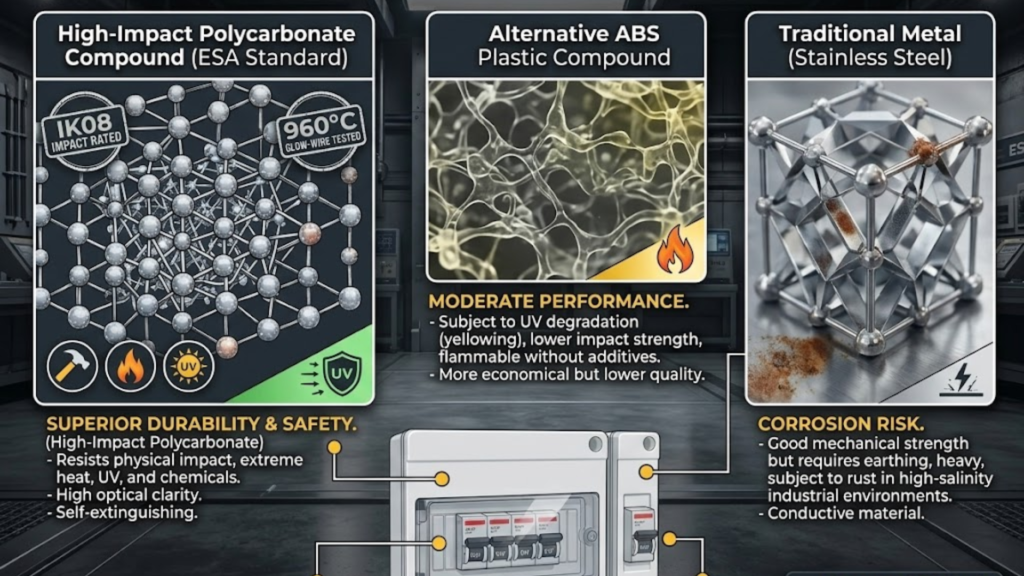
Choosing between materials can be confusing. Use this table to compare the most common options in the Indian market:
| Feature | Polycarbonate (ESA Standard) | ABS Plastic | Metal (CRCA/SS) |
| Durability | Extremely High | Moderate | High (but dents) |
| Corrosion Resistance | 100% Rust-proof | Rust-proof | Subject to rusting |
| Weight | Lightweight | Lightweight | Heavy |
| Electrical Insulation | Natural Insulator | Insulator | Requires Earthing |
| Fire Safety | Self-extinguishing | Flammable (unless treated) | Non-flammable |
| Cost-Efficiency | Best Long-term ROI | Cheap / Low Quality | High Maintenance |
4. Comprehensive Installation & Maintenance Guide: Maximizing the Life of Your MCB Enclosure
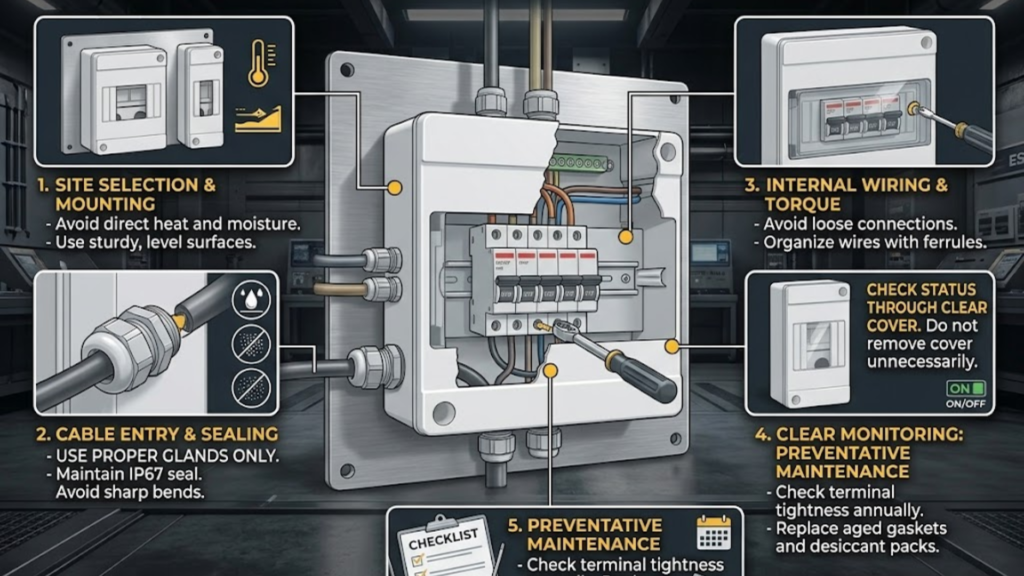
Installing an MCB enclosure junction box correctly is as important as the quality of the box itself. In industrial environments, a poor installation can lead to “hot spots,” moisture ingress, and eventually, catastrophic system failure.
A. Site Selection and Surface Preparation
Before drilling the first hole, you must analyze the environment where the enclosure will be placed.
- Vibration Analysis: In factories with heavy machinery (like CNC machines or crushers), ensure the mounting surface is reinforced. Constant vibration can loosen internal MCB connections over time. If vibrations are high, use rubber grommets or dampers between the wall and the enclosure.
- Thermal Clearance: Do not mount the MCB enclosure junction box directly above heat-generating equipment like industrial furnaces or large motors. High ambient temperatures can cause “nuisance tripping,” where the MCB trips even though there is no electrical fault.
- Accessibility: Ensure there is a 3-foot clearance in front of the box. According to Indian Electrical Standards, the operating handle of the highest switch should not be more than 1.7 meters from the floor.
B. The Art of Cable Entry (Maintaining the Seal)
The most common point of failure for an IP67 box is the cable entry. If you cut a hole and just push the wire through, you have destroyed the IP rating.
- Using the Right Glands: Always use PG (Panzer-Gewinde) or Metric cable glands. For an MCB enclosure junction box, the gland must match the cable diameter perfectly to compress the internal gasket and create a vacuum-tight seal.
- Drip Loops: When installing outdoors (like in solar farms), always create a “Drip Loop” in the cable before it enters the box. This prevents rainwater from running down the cable and directly into the gland.
- Bottom Entry Preference: Whenever possible, enter cables from the bottom of the enclosure. Even if a gland fails slightly over 10 years, gravity will prevent water from entering the box.
C. Precision Internal Wiring
The internal organization of a junction box is the mark of a professional engineer.
- DIN Rail Alignment: Ensure the DIN rail is securely tightened. A loose rail can cause the MCBs to tilt, making it difficult to close the transparent window or operate the switches.
- Torque Management: Use a torque screwdriver for terminal connections. Loose connections are the #1 cause of electrical fires in MCB enclosure junction boxes. Typically, 2.0 to 2.5 Nm is recommended for most industrial MCBs.
- Ferrule Crimping: Never insert “naked” stranded copper wire into an MCB terminal. Always use bootlace ferrules. This ensures every strand of wire is making contact, preventing localized heating and arcing.
D. Labeling and Documentation
An industrial facility might have hundreds of enclosures. Identification is key for safety.
- Circuit Mapping: Use a permanent labeling system on the outside of the box indicating the Source (Incoming) and the Load (Outgoing).
- Internal Circuit Directory: Place a laminated sheet inside the lid or behind the transparent window that details which MCB controls which machine. This saves critical time during a breakdown.
E. Proactive Maintenance Checklist
Even a high-quality ESA enclosure needs a “health check” once a year. Follow this table for maintenance:
| Component | What to Check | Action if Required |
| Gaskets/Seals | Check for cracks or hardening due to UV exposure. | Apply silicone grease or replace the seal. |
| Terminal Screws | Check for tightness (vibration often loosens them). | Re-torque to the specified Nm level. |
| Visual Color | Look for discoloration (browning) of the plastic. | Indicates overheating; check for overloaded circuits. |
| Moisture | Check for condensation inside the transparent lid. | Replace desiccant silica gel packs or tighten glands. |
| Vents | Ensure any breather valves are not clogged with dust. | Clean with compressed air to allow airflow. |
Frequently Asked Questions (FAQ)
Q1: Can I use a domestic MCB box for an industrial workshop? A: No. Domestic boxes are usually IP20 rated, meaning they have no protection against moisture or fine dust. An industrial MCB enclosure junction box is specifically built to handle the mechanical and environmental stress of a factory.
Q2: What is the difference between a Junction Box and an MCB Enclosure? A: A Junction Box is primarily for connecting wires (terminal blocks). An MCB Enclosure includes a DIN rail specifically designed to hold circuit breakers and switches. Many modern ESA products serve both purposes.
Q3: Does Polycarbonate melt in the Indian summer? A: High-quality Polycarbonate has a melting point well above 140°C. Even in 50°C desert heat in Rajasthan, the enclosure remains structurally sound and does not warp.
Q4: Why is IP67 better than IP65 for outdoor solar? A: While IP65 protects against water jets, IP67 protects against temporary submersion. During heavy monsoon floods or water logging, an IP67 box ensures your expensive solar inverters and breakers stay bone-dry.